
“You are not imagining it”: Why we created the free SEND Parent Handbook
For families raising a child with special educational needs, the exhaustion rarely comes from the diagnosis itself. It comes from the waiting lists, the closed doors, and the feeling of facing it all without a map.
As parent Rebecca Sheller put it when trying to access support for her daughter:
“Whichever way I tried to turn, there was a blocker. It feels like you are navigating this maze that no one knows the way out of.”
If that feels familiar, we want to tell you something directly: You are not imagining it, and you are not failing.
Why we built this
Sylva was founded by Ben Cosh after his own family went through the same cycle of waiting lists and contradictory advice. His message in the foreword says it all:
“You should not have to become an expert to get your child the support they need. But until the system changes, you do. So let’s make sure you have everything you need to do it.”
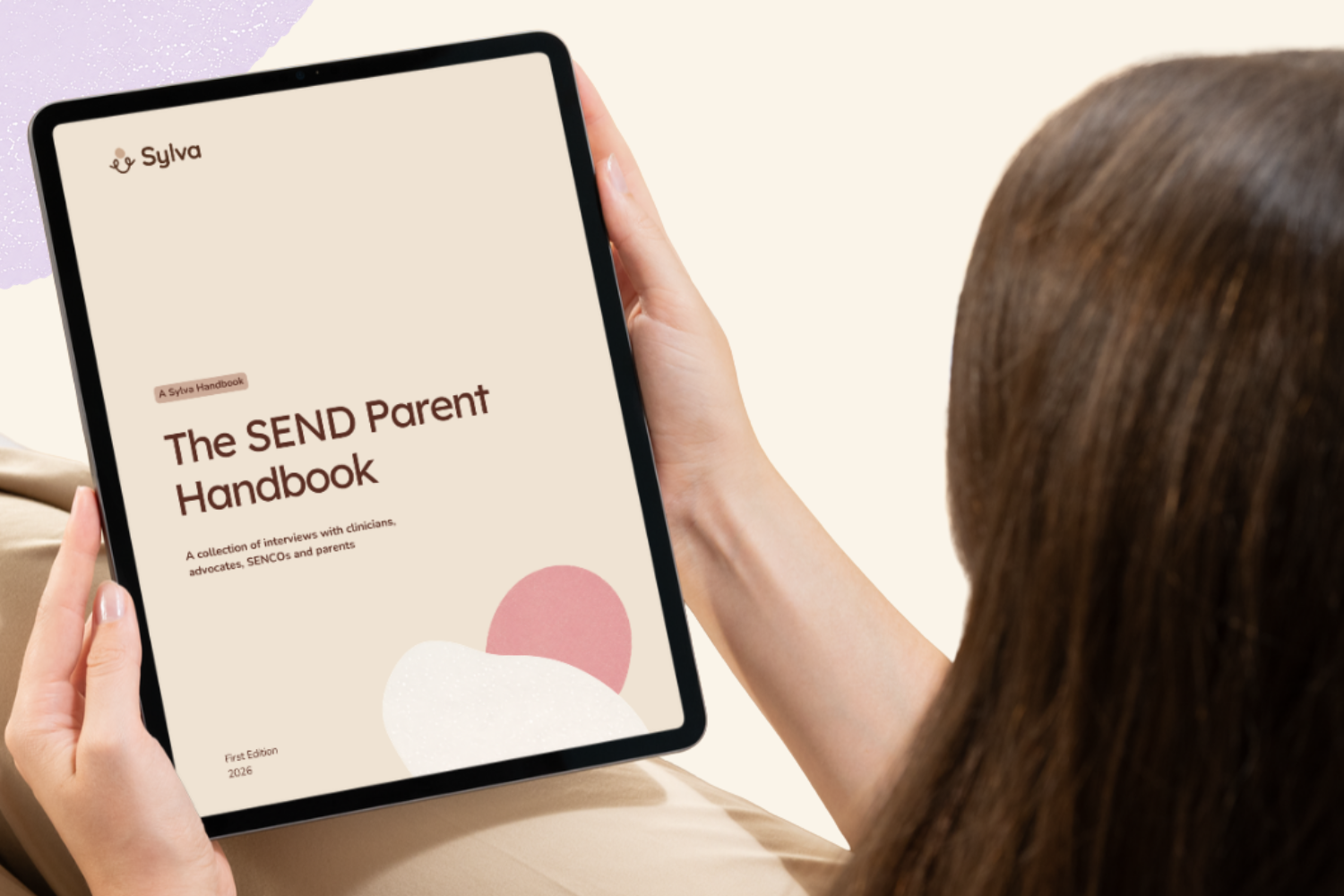
That's exactly what The SEND Parent Handbook is. Built entirely from interviews with clinicians, educational psychologists, SENCOs, coaches and parents who understand the system from the inside. It's completely free, with no sign-up and no obligation.
This isn't just your experience. The numbers make the truth undeniable.
Over 1.7 million pupils in England now have identified special educational needs — an increase of 93,700 in a single year (DfE, 2024–25)
89% of parents say inadequate SEND support is an issue
94% feel overwhelmed trying to access it
Just 9% find it easy to get the advice they need (TTS/Nasen, 2025)
3 in 4 parents of children with SEND have been forced to give up work or cut their hours (Sky News/Support SEND Kids, 2024)
Too often, families encounter a system designed around crisis thresholds rather than early intervention. As Beth Shedden, Safeguarding Lead at Sylva, explains:
“Often, children will need to be significantly behind academically or at risk of exclusion before they can access additional funding in schools, or qualify for an EHCP. This is counterproductive and creates an attainment gap.”
Support varies wildly by postcode. Demand for early intervention far outstrips what's available. And even the most engaged, capable parents can find themselves lost in a system that wasn't designed with them in mind.
The difficulty you are experiencing is not a reflection of your parenting, your persistence, or your child. It is a reflection of a system under enormous strain.
What's inside the SEND handbook
The handbook is practical, honest, and written in plain English. Inside you'll find:
Scripts for difficult school meetings — so you know what to say and how to say it
A plain-English guide to the EHCP process — demystifying one of the most confusing parts of the system
A glossary of SEND terminology — so jargon never leaves you in the dark
Signposting to free, independent advocacy services — because you shouldn't have to fight alone
You are not alone
Beyond the practical tools, the handbook makes a direct case for connection over isolation.
Lauren O'Carroll, ADHD Parenting Coach and founder of Positively Parenting, puts it plainly:
“Don’t give up on finding someone who can support you or who can even just hear you. You can only help your child if someone is helping you.”
Rachel Winder, Autism & ADHD Consultant and author, adds something we think every SEND parent needs to hear:
“Your child is not broken, and neither are you. Their value does not come from how well they fit the system. Their value was there from the very beginning.”
And Amy Rutter, a parent carer who contributed to the handbook, closes it with this:
“You are not alone. What you’re carrying is heavy — the exhaustion, the grief, the relentlessness of it. It’s real, and it’s not a sign that you’re doing it wrong. It’s a sign that you’re doing something incredibly hard without nearly enough support.”
Get your free copy
The SEND Parent Handbook is 100% free to download. No subscriptions, paywalls, or obligations.
Whether you’re just beginning to question whether your child needs additional support, waiting on an assessment, or navigating an EHCP annual review, this guide was written for you.
