
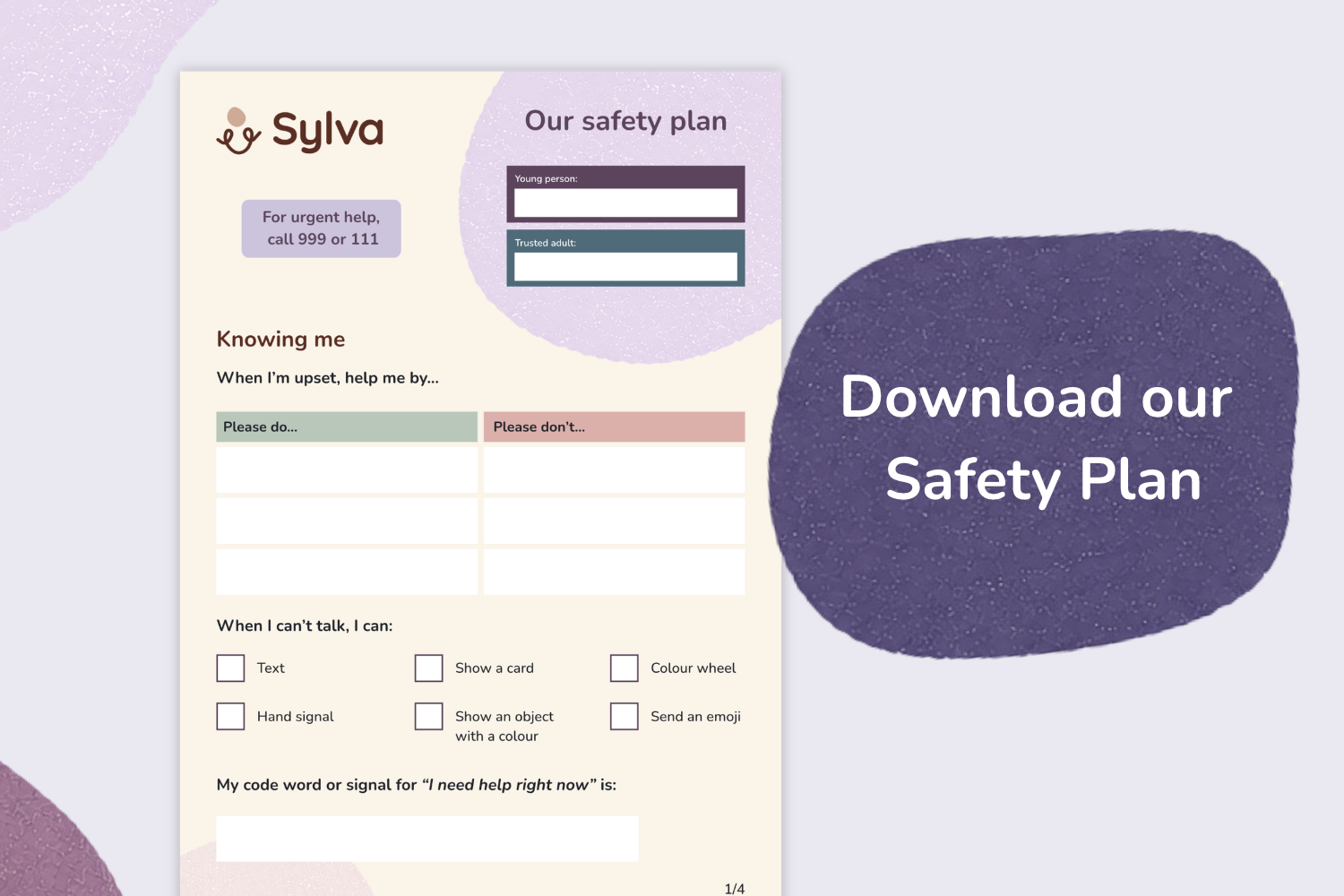
A safety plan is a personal plan a young person writes to help them stay safe when they’re struggling. That might be when they feel overwhelmed, very low, or have thoughts of hurting themselves or ending their life.
When someone is in that kind of distress, it can be very hard to think clearly, remember what has helped before or know who to turn to. A safety plan does that thinking ahead of time. It’s written when the young person feels calmer, so that in a difficult moment they have clear steps to follow instead of having to work things out on their own.
Every safety plan is different, because it’s built around the young person’s own experiences. Many young people find that simply writing it down helps them feel more in control, and reminds them that difficult feelings can pass and that help is available.
Who it’s for
Young people who sometimes feel overwhelmed, very low or unsafe, and want a plan they can turn to in difficult moments.
Autistic, ADHD and other neurodivergent young people. The plan includes ways to communicate when talking feels impossible, and its warning signs include stimming, meltdowns and shutdowns.
Parents, carers and other trusted adults who want to fill it in with a young person, so everyone knows what helps and what doesn’t.
What’s included
Knowing me: what helps and what doesn’t when the young person is upset, plus other ways to communicate when they can’t talk, like a text, a card, a hand signal or an emoji.
A code word or signal that means “I need help right now”.
Zones of feeling, from green (“I’m okay”) to red (“I’m not safe”), with space to note the signs in their body, thoughts and behaviour at each stage.
Ways to calm down alone, with tick-box ideas grouped into quiet and cosy, calming the body, and taking their mind off things, plus space to add their own.
People, places and things that help them feel calmer.
People they can tell, with how to reach each person and a signal to use with them.
Helplines they can contact any time, including 999, NHS 111, SHOUT, Childline and Samaritans, with space for their GP or CAMHS contacts.
Keeping safe at home: what the young person and their parent or carer have agreed together, such as locking away medicines and sharp objects.
Things that matter to me: the people, pets, interests and plans that help them hold on to hope.
A review date, so the plan stays up to date.
How to use it
Fill it in when the young person feels calm, not in the middle of a crisis.
Let them lead. It’s their plan, in their words.
Keep it somewhere easy to find, and consider sharing a copy with other trusted adults, like a teacher or grandparent.
Look at it again on the review date, or sooner if things change.
Download Sylva’s Safety Plan below.
